



Some dogs are perfectly built for couch snuggles and lounging. Others? Built like furry four-legged rockets.
If you’ve ever seen one of these breeds take off, you know the feeling — you merely blink, and they’re already gone, leaving nothing but a rush of air behind them.
Centuries of selective breeding, instinct, and muscle memory all fused into prime athletes that move with virtually zero wasted motion.
Now, let’s take a look at the fastest dog breeds out there, what makes them so fast, and what to keep in mind if you actually live with one.
Everyone talks about top speed in miles or km per hour, but that number alone doesn’t tell the whole story. Two dogs can both hit 35 mph and feel completely different in real life. One explodes and reaches top speed in seconds, while another takes longer to get there but keeps that pace for longer.
Under the hood, all the contenders for the fastest dog breed in the world share the same general toolkit:
That’s why two dogs that look nothing alike can still move with the same unmistakable athleticism.
And with mixed-breed dogs, a lot of that potential is hidden. You might be looking at a “regular” rescue while their genetics quietly borrow those explosive traits from the fastest dog breed. That’s exactly what PetsyDNA’s AI breed identifier can help reveal. Simply snap a photo of your furry loved one and get the actual breed mix, origin, and other characteristics in seconds. With this info, pet owners can better understand their dog’s stamina and sprint potential, and accurately tailor exercise, training, and long-term care.
Curious what actually drives your dog’s speed or stamina? Drop a photo into PetsyDNA’s AI and get the real breakdown in seconds.
We’ve looked all over the web to gather the top speeds from verified racing data and breed performance records to rank the top doggo-sprinters and ultimately conclude what is the fastest dog breed.
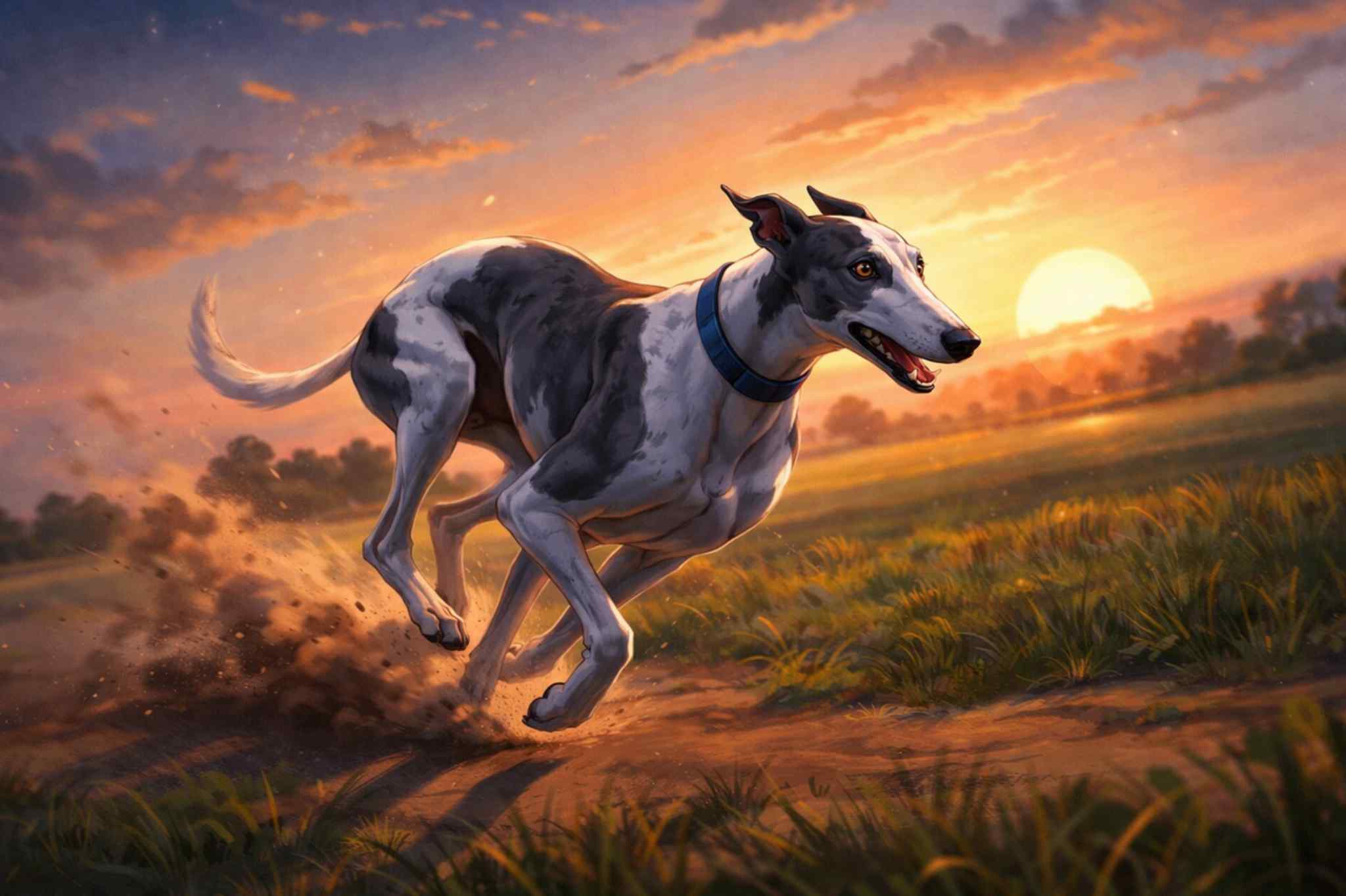
Greyhounds are the undisputed sprint champions, and according to most sources, the fastest dog breed in the world. They’re tall, incredibly lean, and built almost like a living arrow.
Their double-suspension gallop lets them hit top speed in just a few strides, and at full tilt they can reach about 45 mph under the right conditions. There’s no wasted motion in how they move — it’s all precision and power, right down to their narrow heads and lightweight frames.
So if you’re picturing a Greyhound bouncing off the walls all day, flip that image. They’ll give you a brilliant, intense sprint… and then happily spend the rest of the day napping. All in all, if you need a simple answer to “what’s the fastest dog breed”, you can safely say Greyhounds.
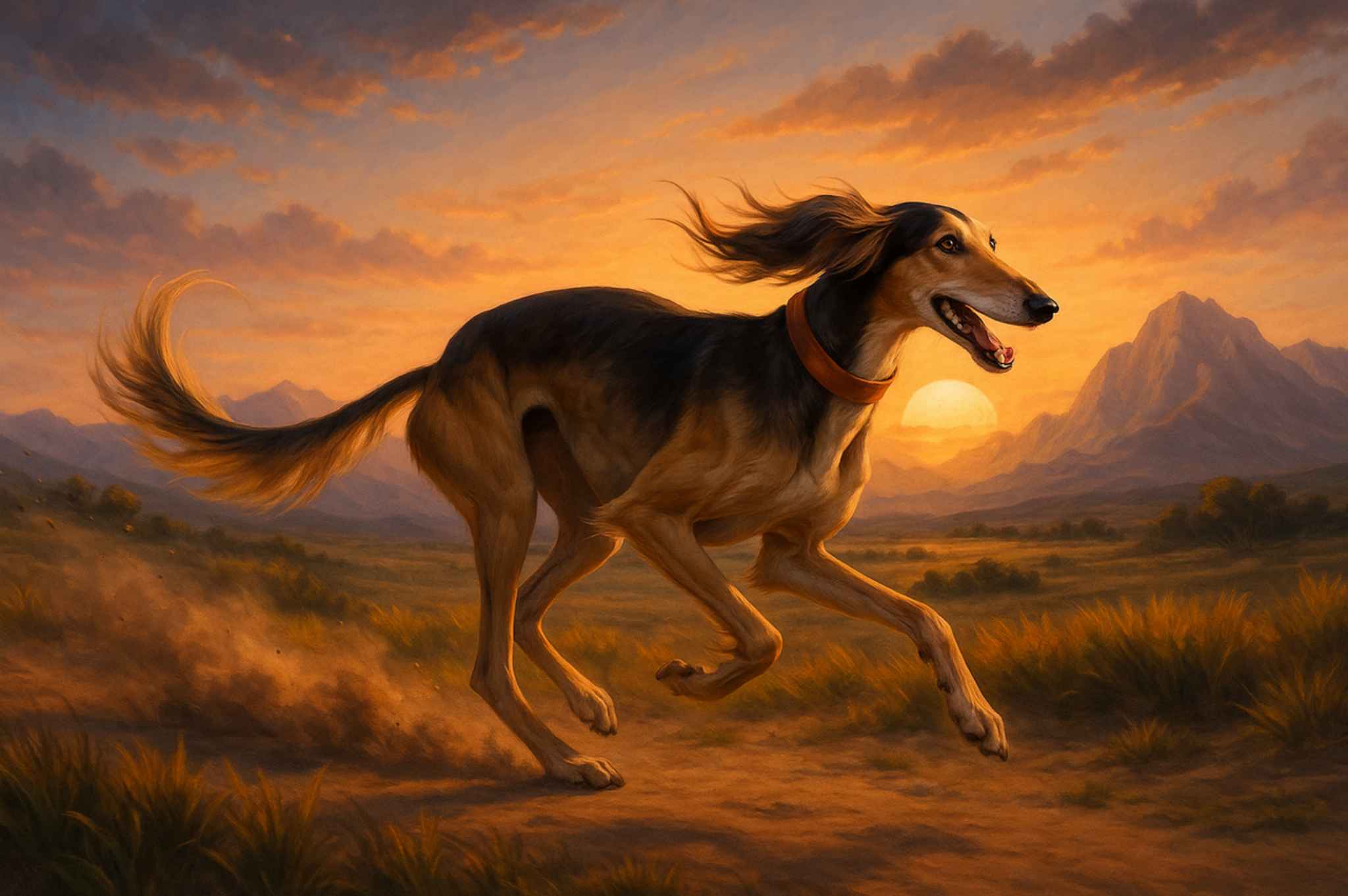
The Saluki is often called the “gazelle dog”, and once you see one run, it adds up. They were bred in the Middle East to hunt over huge stretches of desert, where both speed and endurance weren’t optional.
Their top speed is usually just under a Greyhound’s, but Salukis can hold a strong pace over much longer distances and tougher terrain, making them more like distance runners than pure sprinters.
On an open field, they look less like they’re sprinting and more like they’re effortlessly floating forward.
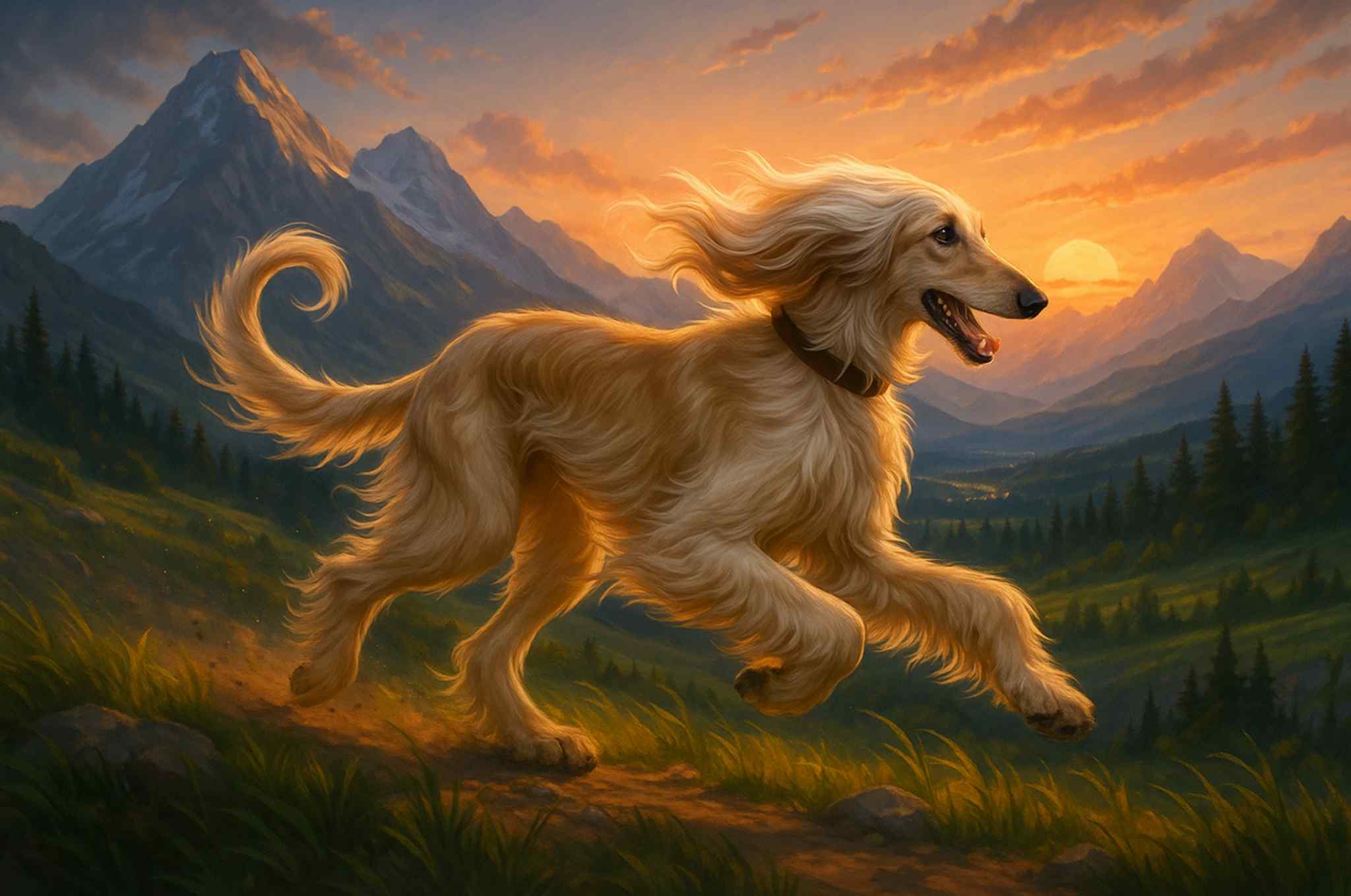
Afghan Hounds get noticed for that insane, flowing coat, but under all that glamour is a legit working athlete. This breed comes from harsh, mountainous terrain where they had to fly over steep, uneven ground while chasing prey at high speed. That mix of power and nimble footwork makes them way faster than most people expect at first glance.
When an Afghan Hound really opens up in full stride, you’re watching function wrapped in fashion — a working athlete that just happens to look like a canine supermodel.
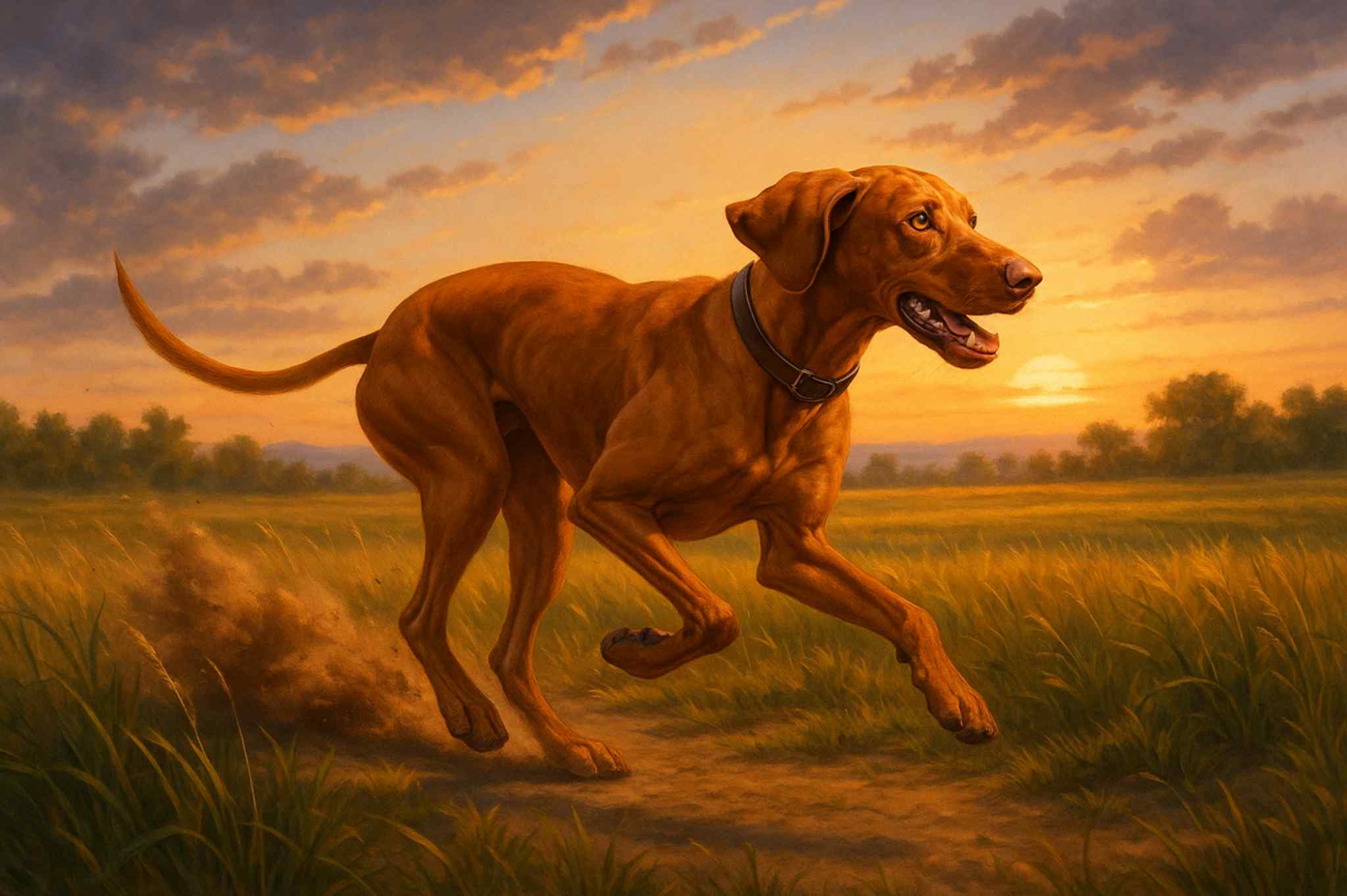
Vizslas are versatile hunting dogs with a powerful built-in engine. Unlike sighthounds, they’re not just built for straight-line chases, but rather possess a blend of speed, stamina, and unparalleled responsiveness to their handler. Their muscular but streamlined bodies allow them to hit impressive speeds while covering a lot of ground on a hunt or a long run.
If you’re a runner or very active outdoors, this is one of the breeds that can realistically keep up – and actually enjoy it – without burning out quickly.
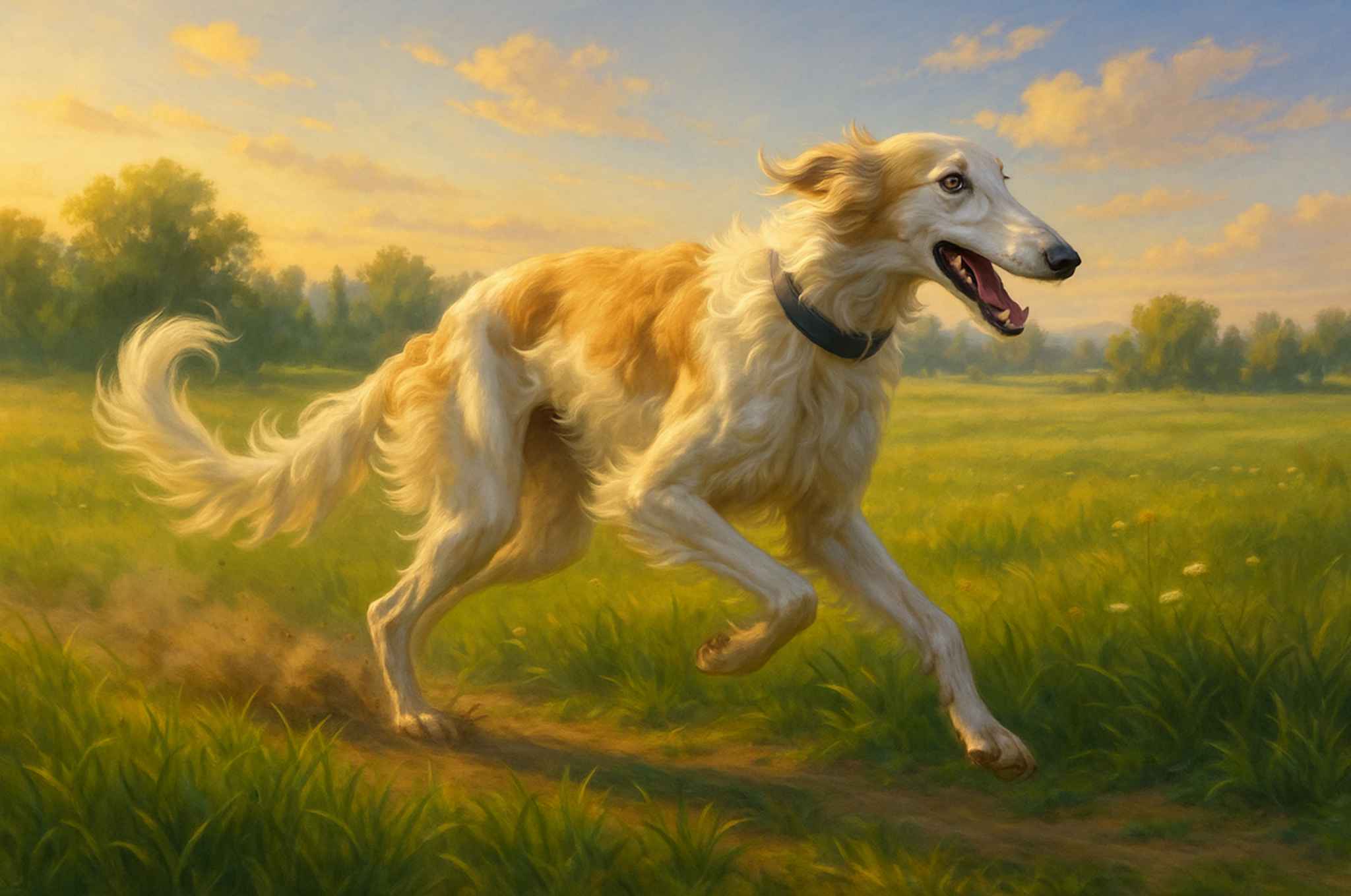
Borzois, also known as Russian Wolfhounds, are tall, elegant sighthounds originally bred to hunt wolves and other fast-moving game across open mixed-terrain estates. They combine serious top speed with a smooth, floating gait that looks almost too effortless for the pace they’re keeping. In sprint tests, Borzois can hit the mid-30 mph range, putting them firmly in the fastest dog breed conversation.
They’re a great example of how “big” doesn’t necessarily mean slow. When a Borzoi stretches out at full speed, you see a huge dog moving with the same glide as a Greyhound.
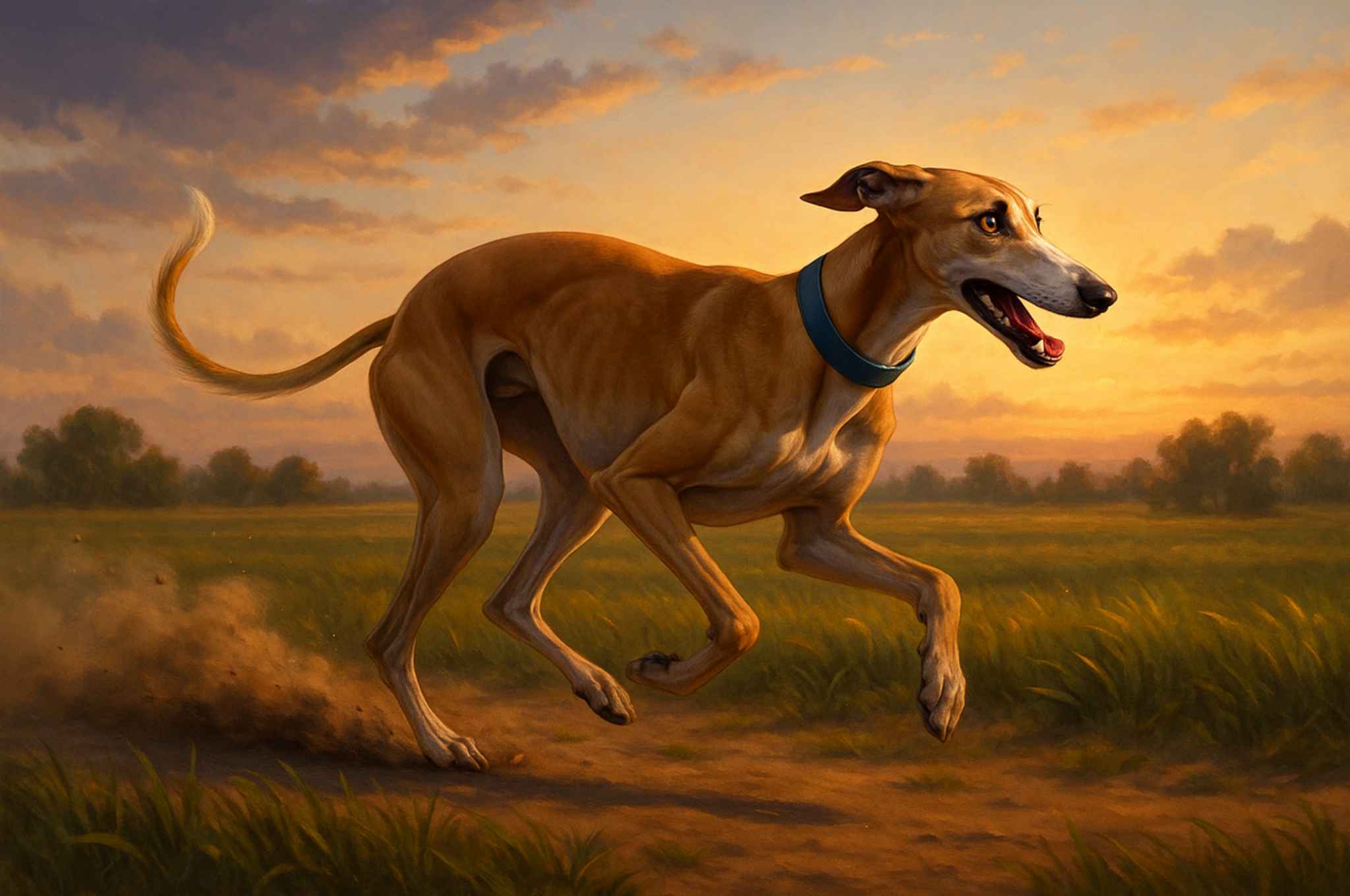
Whippets are often described as “mini Greyhounds,” and that’s not far off. They share the same general body structure, just on a smaller scale. They can reach roughly 35 mph and dominate many amateur racing and lure coursing events. At home, though, they tend to be quiet, gentle, and highly attached to their people.
Like Greyhounds, Whippets live life in two modes: brief, brilliant bursts of speed followed by long, peaceful stretches of cozy lounging on the couch.
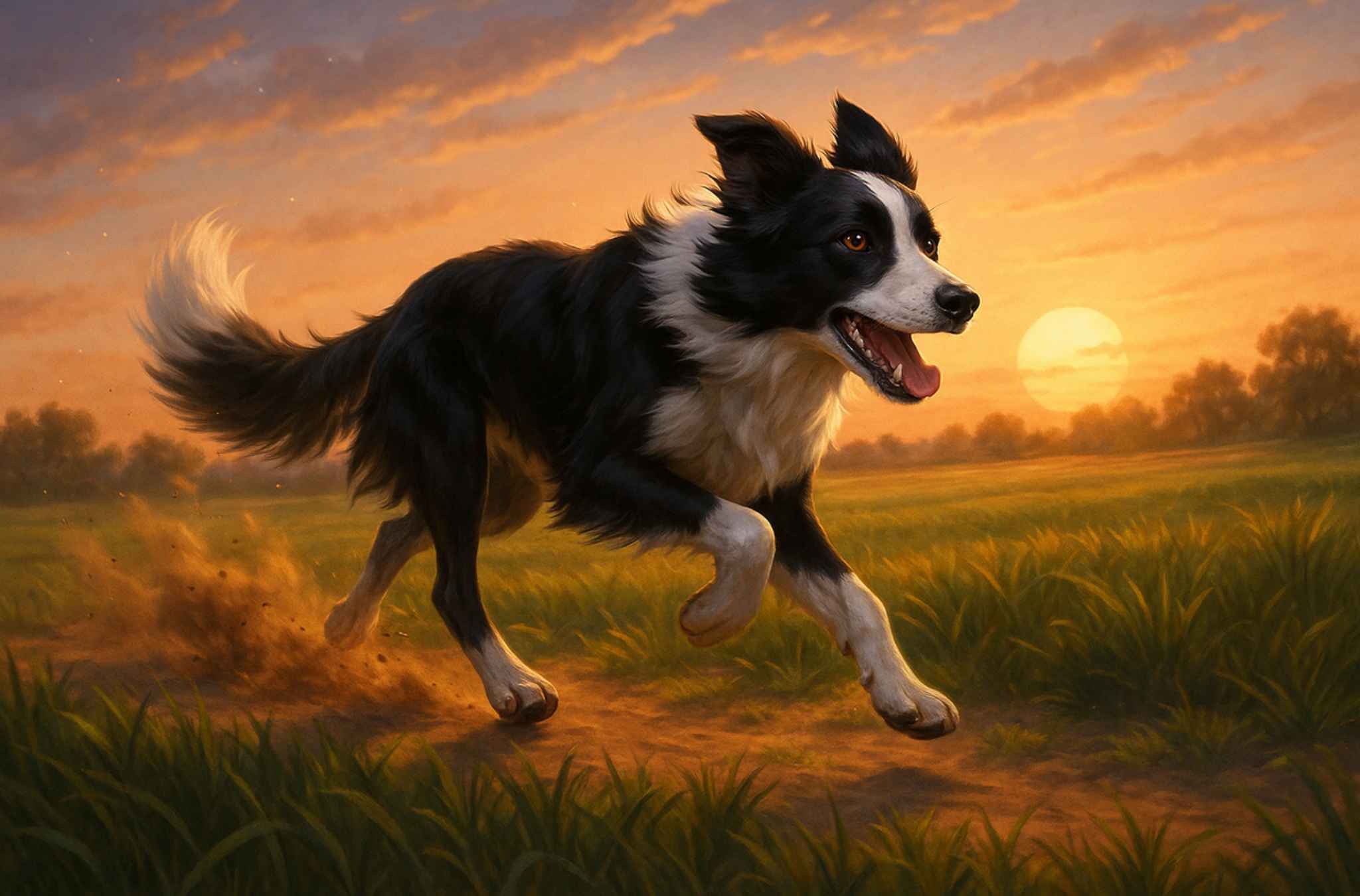
Border Collies don’t usually top speed charts, but in real life, they’re right up there. They were bred for herding, which means short bursts, sudden stops, sharp agile turns, and a brain that’s always on. Their top speed looks good on paper, but the real magic is how fast their mind and body fire together when they’re working.
When you watch a Border Collie run, you’re seeing raw speed plus live, high-IQ problem-solving happening at full tilt. It’s a different kind of athleticism, but just as impressive.
Everyone assumes that every fastest breed of dog has a built-in engine that never stops, and they need endless exercise. But that’s not always the case.
Many sprint-based breeds like Greyhounds and Whippets are perfectly happy with a few solid bursts of running and then lounging for the rest of the day.
Meanwhile, Border Collies, Vizslas, and other high-drive working or sporting breeds will feel restless on most days, not just physically but mentally, always looking for a job, whether you assign one or not.
Even though this comes down to misplaced energy rather than “problem” behaviors, that’s where many pet owners may get overwhelmed.
This is why understanding your dog’s actual background matters. A mixed-breed dog might look calm on the outside but carry high-energy performance genetics from multiple breeds.
PetsyDNA is an AI breed identifier that gives you a simple yet accurate breakdown of your dog’s breed mix, which allows you to truly understand their unique traits — energy levels, athletic potential, behavioral tendencies, and more.
In practice, that means you can:
PetsyDNA test is a simple way to better understand their athletic blueprint and build them the optimal lifestyle and environment. Simply upload a photo of your 4-legged companion and get instant, AI-powered results.
If you’ve ever wondered why your dog behaves the way they do, run a quick AI scan with PetsyDNA. One photo, instant clarity.
Top speed is just one part of the story. Some breeds are pure sprinters, while others are built for endurance. Some explode off the line like rockets, while others quietly outpace everything over time, all making it hard to pinpoint exactly what breed is the fastest dog.
What makes these dogs so fascinating isn’t just how fast they move, but how closely their bodies and instincts match the jobs they were bred to do.
Once you understand those genetic roots, be it through research, observation, or a simple DNA test, you start making smarter choices about training, exercise, and health.
Don’t know where to start? Get the ball rolling right away with PetsyDNA — simply snap a picture of your furry loved one, and let AI give you an accurate breakdown of their breed makeup.



Getting your first dog is one of those precious life moments that sticks forever. It’s exciting, emotional, and, if we’re honest, a little stressful. You go from “I want a pup” to “Okay, now I’m responsible for an actual living creature” pretty fast. Type “what are the best dog breeds for first time owners” into […]
Bringing a dog into a family with kids isn’t a light decision. You’re not just choosing a pet. You’re adding a new family member that will completely grow alongside them, be their friend, and guardian. They will fully affect your daily life — mornings, chaos, noise, quiet evenings, bad moods, good moods, all of it. […]

Life is busy — but that doesn’t mean you can’t have a dog. Most people who say “I’d love a dog, but I’m just too busy” aren’t making excuses. They’re just trying to be realistic and thoughtful about having a new pup join the family. Long days at work, full calendars, mental overload, and not […]

Apartment living doesn’t mean giving up on the idea of having a dog, it just means you need to be extra considerate about finding the right breed. And in any case, square footage matters far less than training, temperament, energy levels, and how well a dog handles indoor life. Pick the right breed (or mix), […]

When people ask “what’s the largest dog breed?”, they’re rarely talking about the same thing. Some picture a dog that’s almost eye-level when standing next to them, while others think of raw body weight. You know, the kind of dog that feels like a sandbag when it leans on your leg. On top of that, […]
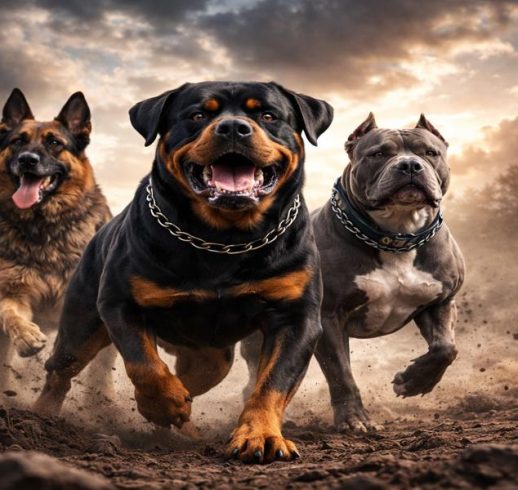
People love debating what’s the strongest dog breed. Sometimes it’s just out of curiosity, other times it’s a pet owner trying to understand why their sweet little furball can pull 10 times their weight like a freight train. And here’s the thing, strength isn’t just about size. We have to take into account bite force, […]

Some dogs make you smile. These ones make you stare. There’s just something captivating and majestic about the gentle giants — dogs so big they look like they stepped straight out of a fairy tale. Yet behind all that size, you’ll rarely find anything but kindness. Anyone who’s been lucky enough to meet some of […]